Turn the Dial, Not the Phone: Cottage Radio as a Local Compass
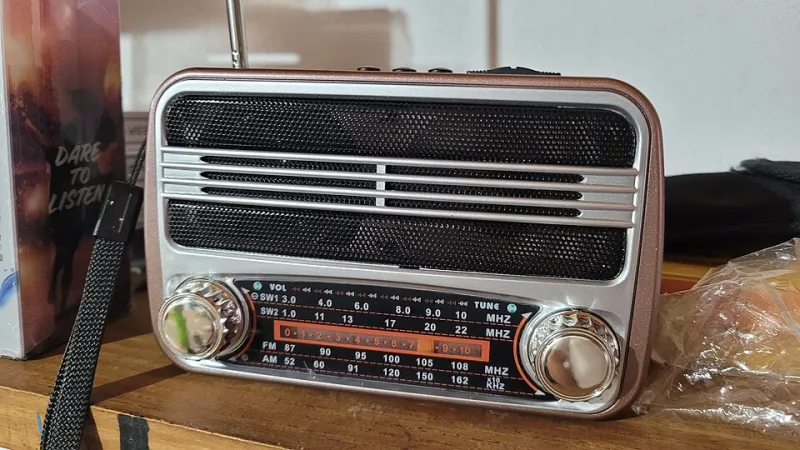
Photo: Horacio Cambeiro, CC BY-SA 4.0, via Wikimedia Commons
There is a moment on the first morning of a cottage break when the kettle is on, someone is hunting for the teabags, and the phone is still face-down on the dresser. That is the moment the radio in the corner starts to earn its keep. Not because it is clever, or because it streams anything, but because it is already tuned to somewhere nearby. A personal playlist reminds you of home. A local station reminds you where you are.
This is not an argument against playlists. They have their place, especially on the drive down and on the walk where the headphones come out. But inside a rural cottage, the shared set on the windowsill does a different job. It brings weather you can act on, voices from the next town, adverts for farm shops you might actually visit, and a low-effort soundtrack that nobody has to curate. At S Simpson Cottages, the radio is often the first thing guests touch after the kettle. It is also the thing most likely to be left on low while a board game unfolds.
The First Morning Preset
Breakfast radio is not background noise. It is a practical tool wrapped in chatter. The local forecast on a BBC county station will tell you whether the rain is clearing by eleven or settling in for the afternoon. It will mention wind on exposed ridges, which matters if you are planning a walk with a picnic. It will mention the coast road, the market town bypass, and the school bus route that doubles as your shortcut. None of that is dramatic. All of it is useful.
For families, that first forecast can shape the whole day. A wet morning becomes a slow pancake morning and a village museum; a bright window after lunch becomes the footpath you were saving. For couples, it is gentler: a reason to linger over a second cup, a hint that the afternoon walk should be the shorter loop, a small shared decision made without opening a single app.
The farming forecast after the news is worth catching too. It is not aimed at holidaymakers, which is exactly why it is interesting. It talks about ground conditions, wind, and the kind of rain that soaks a field. You do not need to understand every line to get the gist: the countryside has its own weather grammar, and the radio speaks it.
A Shared Soundtrack, Not a Shared Algorithm
A playlist is a private thing, even when it is playing out loud. It was built by one person, for one mood, and it tends to keep everyone in the same lane. Radio is less polite. It gives you a song you would never have chosen, followed by an advert for a farm shop, followed by a listener's birthday shout-out to someone in a village you drove through yesterday. That unpredictability is the point.
Children hear local accents and local place names. They hear that the county show is on, that a road is closed, that someone's sheepdog has won something. Couples hear a late-night jazz show or a Saturday soul programme they would not have found on their own. Nobody has to negotiate the queue. The station does the deciding, and the volume knob does the rest.
There is also a quiet social benefit. The radio becomes a shared reference point. Someone hears an advert for a farm shop with an honesty box and suggests a detour. Someone else hears a traffic report and reroutes the afternoon. The adverts become landmarks: the garage with the good bacon roll, the garden centre that sells logs, the pub with the quiz on a Thursday. You start to build a mental map out of sound.
Finding the Station Without a Search Bar
The tempting move is to reach for the phone and search for 'local radio near me'. Resist it for an hour. The tuning knob is the search engine. Most cottage radios will scan FM or DAB and stop at whatever is strong enough to hold. Do that on the first afternoon, when you are still unpacking, and let the set find three or four options. Then save them as presets, or write them on the back of the welcome leaflet if the radio is older than the internet.
There are other low-screen routes. The cottage welcome folder often lists the local BBC station and any community radio. The village shop or pub will know which frequency the farming set uses. The car radio is a good tuning tool: scan there, find the station that comes through clearest on the lane, then set the kitchen radio to match. If the cottage has a guest book, someone may have already noted a favourite. If not, leave your own discovery for the next guest.
A simple hierarchy helps. Start with the BBC local station for county news and travel. Add a commercial station if you want music with adverts that tell you what is happening in the nearest town. Try community radio if you can find it; it is often the most specific and the least polished, which is part of its charm. Keep Radio 4 in reserve for the shipping forecast, the quiz, or the comforting sound of someone reading the news at a sensible pace.
Small Rituals, Lower Volume
Radio works best in a cottage at low volume, doing one job at a time. It is the breakfast weather, the cooking soundtrack, the half-heard accompaniment to a jigsaw. It is not a replacement for conversation, and it does not need to be on all day. Part of the pleasure is turning it off when the walk begins and turning it back on when the boots come off.
Families might find that the radio replaces the usual 'what shall we do now?' debate with a smaller, calmer prompt: the forecast says the rain is due at two, so let us go out now. Couples might find that a local late-night show is better than scrolling for something to watch. The set in the corner asks nothing of you. It does not need a login, a charger, or a decision.
The Dial Worth Leaving Where It Is
When the key goes back in the box, the radio can be switched off without ceremony. But the presets stay. That is a small, useful kind of goodbye: the next guest arrives, presses one button, and hears the weather for the hills they are about to walk. It is not nostalgic, and it is not anti-technology. It is simply local. A phone tells you what you already like. A cottage radio tells you what is happening outside the window.