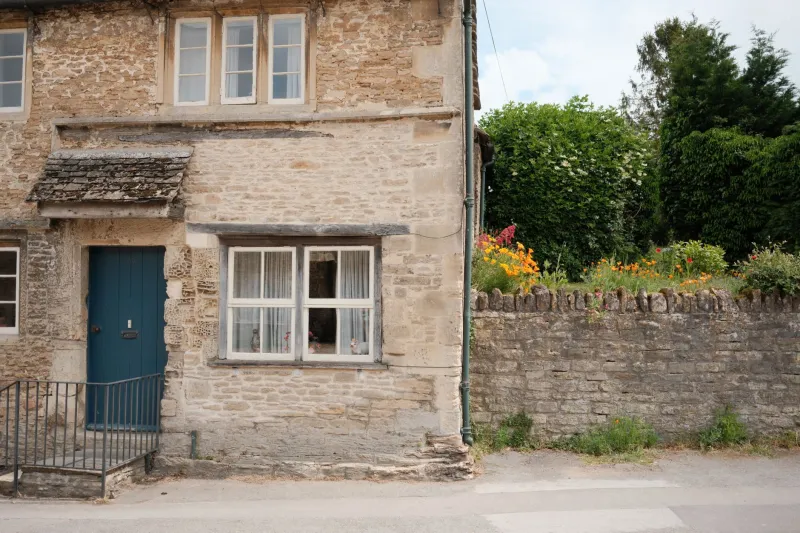
A Small Tree and a Long Walk: The Case for a Cottage Christmas

Somewhere between the second tub of Celebrations and the fourth round of washing-up, a thought tends to arrive: what if we simply didn’t do all this? Not cancel Christmas — just move it somewhere smaller, quieter and a good deal less sticky. A rural cottage in late December offers exactly that. This isn’t a Spartan affair or a boycott of the season. It’s a festive week with the volume turned down, the pace set by daylight rather than the delivery van, and a kitchen table that seats everyone without a leaf.
What a cottage Christmas actually looks like
Picture dark by half past three, a woodburner doing its steady work, and one string of lights across the mantel rather than six sets around the gutter. Mornings start with a walk because the lanes are empty and the light is good. Lunch is a proper sit-down affair but not a military operation. Afternoon is a puzzle, a film, a nap, or all three in shifts. If there’s a village carol service, you go. If there isn’t, you don’t invent one. The day has a shape, but nobody is checking the clock.
That rhythm suits couples as much as families. For couples, it’s a Christmas without the diplomatic balancing act of two sets of relatives. For families, it’s a week where the children have space to be bored — which, in our experience, is where the good stuff starts.
Decorating without the loft crawl
The temptation is to recreate your living room at home, just in a different postcode. Resist it. A cottage at Christmas needs far less than you think: a small potted tree on a side table, a wreath on the door, a few candles, and something green draped over a picture frame. Foraged holly and ivy are fine if you pick responsibly and only from what’s clearly abundant — never from a hedgerow that looks pruned or a garden that isn’t yours. A paper chain made on the first evening will do more for the atmosphere than a box of matching baubles.
Ask the owner what’s already there. Many cottages keep a box of decorations, a tree, even spare fairy lights, precisely so guests don’t have to pack the car like a grotto. And do check the cottage’s rules on candles and open fires before you get creative.
The food shop: book it, don’t binge it
Festive food shopping has a way of expanding to fill the space available. In a cottage with a modest fridge and a short drive to the nearest shop, that tendency is a trap. The practical answer is to pre-order the centrepiece — a bird, a joint, a good pie — from a village butcher or farm shop well before Christmas 2026, and collect it on the way in. Everything else can come from a normal shop, bought for the number of people actually eating.
Plan Christmas Day around one oven and one shelf. A simple roast with two vegetables and a decent pudding beats a three-bird stress test. Boxing Day is leftovers, cold cuts, chutney and a walk. If you’re staying a week, book a midweek delivery or click-and-collect slot rather than doing a daily dash to the shops.
Relatives, invitations and the fine art of being away
Tell people early. Not in a defensive way, just plainly: we’re away this year, we’d love to see you in January. The earlier it’s said, the less it sounds like a snub. If you want to include relatives, invite them for a walk and a cup of tea rather than a full second Christmas. A shared flask on a cold hill often does more than a formal dinner.
Some relatives will be relieved. Others will need a phone call at an agreed time on Christmas Day, and that’s fine — a ten-minute video call from a cottage kitchen, with the fire crackling behind you, is a lovely thing. What you’re not doing is cancelling Christmas. You’re changing the venue.
A loose shape for the week
Don’t build an itinerary. Build three or four anchors and let the rest fill in. Christmas Eve: a short afternoon walk and, if there’s one nearby, a carol service. Christmas Day: cooking, eating, a board game, no long drive. Boxing Day: fresh air, whatever the weather, and a pub if one is open. One day in the middle: absolutely nothing planned. That’s the one people remember.
The carol service question
You don’t have to go. But if you fancy it, a village church service on Christmas Eve is one of the great quiet pleasures of a rural break. Wrap up warm, arrive early, sing the bits you know and mumble the bits you don’t. There’s usually a mince pie at the back and a genuinely warm welcome. Check the parish notices or the village hall board — details are often still on paper, which is part of the charm.
The fear of missing out
There will be a moment, probably on Christmas morning, when someone says ‘what are the others doing?’ That’s normal. But a cottage Christmas doesn’t mean missing out; it means choosing a different sort of day. Children remember the walk in wellies and the silly game far longer than they remember the fourth present. Adults remember not being exhausted. And nobody has ever looked back on a festive week and wished they’d spent more time peeling potatoes.
Before you go
Check what’s open locally over the bank holidays, fill the car before the last few miles, and pack for mud: boots, waterproofs, a torch, layers. Bring a couple of games and a good book. Leave the rest at home.
Then shut the door, put the kettle on, and let the quiet do its work.